
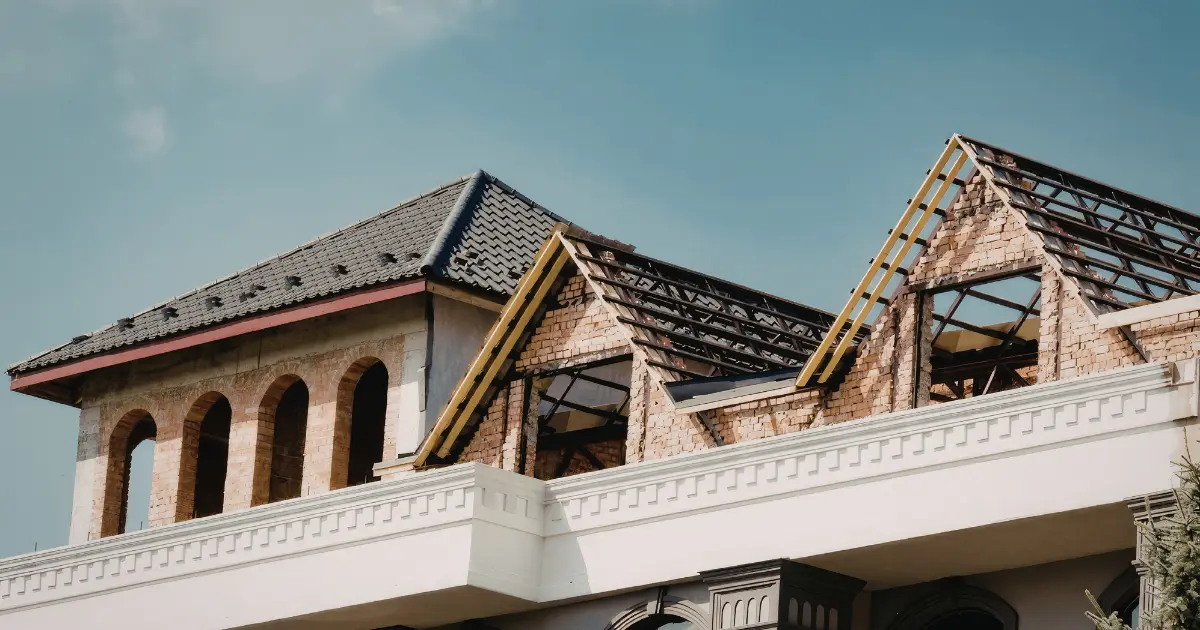
A damaged roof is more than just an ugly problem sitting above your house. It can become a danger faster than most homeowners realize. Small cracks, hidden leaks, or sagging areas may seem minor today, but they can quickly turn into costly repairs, ceiling collapse, mold growth, or even electrical hazards.
Structural roof damage often weakens the entire framework of a house, reducing its ability to withstand wind, rain, and temperature changes while also allowing moisture to spread unnoticed through insulation, wooden beams, and interior ceilings over time, gradually becoming worse. As the damage spreads, repair costs usually increase because additional roofing materials and structural components may need replacement instead of simple repairs.
One heavy storm can make a weak roof fail without warning. If your roof is showing strange signs, acting early could save your home, your money, and most importantly, your family’s safety. Scheduling a professional roof inspection at the first sign of structural damage can help identify hidden issues before they become expensive emergencies and protect your home’s long-term value.
What Is Structural Roof Damage?
What Causes Structural Roof Damage? 
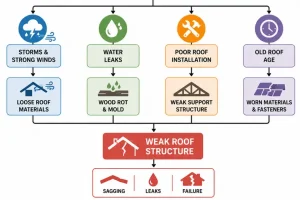
Many homeowners do not notice roof problems until serious damage appears. Structural damage often starts slowly and becomes worse over time. Heavy weather, trapped moisture, and weak materials are some of the most common reasons roofs begin to fail. Understanding these common causes can help you recognize early warning signs, schedule timely inspections, and prevent expensive structural repairs before the damage spreads throughout your home.
Storms and Strong Winds: Heavy storms can loosen roofing materials and weaken the wooden structure underneath. Strong winds may also shift support beams or tear away sections of the roof completely. Flying debris, hail, and repeated exposure to severe weather can create hidden structural damage that may not be visible from the ground. Even a single powerful storm can leave your roof vulnerable to future leaks and collapse if repairs are delayed.
Long-Term Water Leaks: Water that keeps leaking into the roof can slowly rot wood and weaken support areas. Over time, the roof becomes soft, unstable, and dangerous during heavy rain. Moisture trapped inside the attic or insulation also encourages mold growth and wood decay, causing structural components to lose their strength. Small leaks that go untreated for months often become major structural problems requiring extensive repairs.
Poor Roof Installation: If a roof was installed incorrectly, the structure may not hold weight properly. Weak connections and low-quality materials often lead to early structural problems. Improper flashing, inadequate fastening, and poor workmanship can allow water to enter hidden areas, accelerating damage. Choosing experienced roofing professionals helps ensure the roof is installed correctly and performs safely for many years..
Old Roof Age: Older roofs naturally weaken over time. Years of sun, rain, heat, and moisture can slowly damage the internal structure and reduce overall roof strength. Roofing materials become brittle, wooden supports may deteriorate, and fasteners can loosen with age. In many cases, aging roofs also require gutter replacement because worn or damaged gutters fail to drain water properly, increasing the risk of moisture damage to the roof structure. Regular inspections become increasingly important as a roof gets older, helping identify structural issues before they become serious safety risks.
Common Signs of Structural Roof Damage
- Roof sagging in the middle or near edges.
- Cracks appearing along ceilings or interior walls.
- Water stains spreading across ceiling surfaces quickly.
- Roof making popping or cracking sounds during storms.
- Doors and windows suddenly becoming difficult to close.
- Large dips or uneven sections visible on roof.
- Mold growth appearing near attic or ceiling areas.
- Shingles missing after strong wind or heavy rain.
Dangerous Warning Signs You Should Never Ignore 
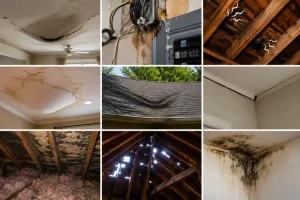
Large Roof Sagging Areas: A sagging roof usually means the support structure underneath is failing. This warning sign often becomes worse during storms or after heavy rainfall and may eventually lead to collapse.
Water Entering Electrical Areas: Leaking water near wiring, lights, or breaker panels creates serious electrical dangers. Moisture can increase the risk of shocks, sparks, or even house fires during bad weather.
Cracking Sounds During Wind: Loud cracking or popping noises can signal movement inside the roof structure. These sounds may happen when weak beams shift under pressure from wind or excess weight.
Ceiling Bulging With Water: A bulging ceiling often means trapped water is building above it. The ceiling material can suddenly burst, causing flooding and additional structural damage inside the home.
Roof Sections Starting to Sink: When parts of the roof begin sinking downward, the internal frame may already be severely weakened. This issue usually requires immediate professional inspection and repair.
Walls Separating Near the Ceiling: Small gaps forming between walls and ceilings can point to roof movement. Structural shifting may spread quickly if the damaged area remains untreated for too long.
Mold Spreading Through the Attic: Heavy moisture from roof damage creates the perfect environment for mold growth. Mold can weaken wood structures further while also affecting indoor air quality.
Visible Light Through the Roof: If sunlight is visible inside the attic through roof gaps, serious structural damage may already exist. Openings allow water, pests, and outside air to enter easily.
Why Structural Roof Damage Gets Worse Fast
Structural roof problems rarely stay small for long. Water continues spreading into wood, insulation, and walls while weak areas slowly lose strength. Strong winds, heavy rain, or extra roof weight can suddenly make the damage much worse.
| Cause | How It Makes Damage Worse |
|---|---|
| Water Intrusion | Moisture spreads through wood, insulation, and ceilings, causing rot, mold growth, and weakening structural supports over time. |
| Weak Structural Components | Damaged rafters, trusses, and roof decking lose strength, making the roof less able to support normal loads. |
| Severe Weather | Heavy rain, strong winds, hail, and storms can quickly enlarge cracks, loosen roofing materials, and increase structural damage. |
| Extra Roof Weight | Standing water, wet insulation, snow, or fallen tree branches add weight that stresses already weakened roof sections. |
| Hidden Structural Damage | Many problems develop beneath roofing materials, allowing deterioration to continue unnoticed until major repairs are needed. |
| Delayed Repairs | Waiting to fix small issues allows damage to spread, increasing repair costs and raising the risk of structural failure. |
Can Structural Roof Damage Make Your Home Unsafe?
Yes, severe roof damage can make a home unsafe to live in. Weak roof areas may collapse without warning, especially during storms or heavy rainfall. Water leaks can also damage electrical systems and create fire risks. In some cases, unstable roofs affect walls, ceilings, and even the overall structure of the house if repairs are delayed too long, potentially impacting nearby exterior components and siding installation.
In advanced cases, the building may lose structural balance, causing doors and windows to misalign, and increasing the risk of partial ceiling collapse that can endanger occupants inside the home unexpectedly during extreme weather conditions.
Ways to Reduce Roof Damage Risks 
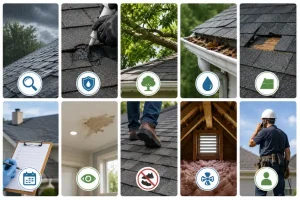
- Inspect your roof after every major storm or heavy rain.
- Repair small leaks before moisture spreads into wood structures.
- Remove heavy tree branches hanging directly over your roof.
- Keep gutters clean to prevent standing water buildup problems.
- Replace missing shingles quickly after strong wind damage appears.
- Schedule yearly roof inspections to catch hidden structural issues.
- Watch ceilings closely for stains, cracks, or bulging sections.
- Avoid walking on weak or visibly damaged roof areas.
- Fix attic ventilation problems to reduce trapped roof moisture.
- Call roofing professionals immediately for serious structural warning signs.
How Professionals Inspect Structural Roof Damage
Roof inspections help identify hidden structural problems before they become dangerous. Professionals check both the outside and inside of the roof to find weak areas, trapped moisture, damaged supports, and safety risks. They also inspect the attic, ceilings, flashing, roof framing, and clay tile roofs for signs of movement or water damage. A detailed inspection helps homeowners understand how serious the problem is and what repairs may be needed immediately. Specialists may also use moisture meters, thermal imaging, and other non-invasive methods to find hidden damage that may not be visible during a standard visual inspection. These findings help determine the severity of structural roof damage and whether the roof needs minor repairs, structural reinforcement, or more extensive restoration.
Key Areas Examined in a Roof Damage Inspection
| Inspection Area | What Roofers Look For |
| Roof Surface | Missing shingles, dips, cracks, storm damage |
| Roof Structure | Weak beams, sagging supports, wood rot |
| Attic Space | Moisture buildup, mold, poor ventilation |
| Ceiling Areas | Water stains, bulging, structural movement |
| Flashing & Edges | Gaps allowing water to enter roof system |
| Gutters & Drainage | Overflow issues causing roof water damage |
What Happens If Roof Damage Is Ignored?
Ignoring structural roof damage can create serious problems throughout the home. What starts as a small weak area may slowly spread into ceilings, walls, insulation, and electrical systems. Over time, repair costs become much higher and the home becomes less safe during storms or heavy rain.
Water Damage Spreads Quickly
Roof leaks allow moisture to move deeper into the house structure. This can damage drywall, flooring, insulation, and wooden framing in multiple rooms. In severe cases, water can also seep into hidden cavities between walls and ceilings, making the damage harder to detect and increasing the risk of long-term structural weakening and interior deterioration.
Mold Growth Becomes Worse
Wet roof materials create perfect conditions for mold growth. Mold can spread through attic spaces and affect both indoor air quality and structural wood strength. If left untreated, mold colonies can expand rapidly across beams and insulation, releasing spores that worsen respiratory problems and further weaken the integrity of wooden roof structures and surrounding materials.
Repair Costs Increase Over Time
Small roof repairs usually cost far less than major structural replacements. Delaying repairs often leads to larger damage that requires expensive reconstruction work later, along with potential secondary issues like insulation replacement, interior repainting, and structural reinforcement. As damage spreads, contractors may need to replace entire roof sections instead of performing simple fixes, significantly increasing labor, material costs, and overall restoration time.
Can Structural Roof Damage Affect Home Value?
It can lower your home’s value significantly. Buyers often avoid homes with major roof issues because repairs can be expensive and risky. Even small visible signs like sagging areas or ceiling stains may reduce buyer confidence. In competitive markets, properties with roof problems often stay unsold longer, and sellers may need to offer discounts or repair credits to attract serious buyers and close deals successfully.
When Should You Call a Roofing Professional?
You should contact a roofing professional as soon as you notice warning signs like leaks, sagging, cracking sounds, or water stains. Waiting too long can make the damage more dangerous and expensive to repair. A professional inspection helps confirm whether the problem is cosmetic or structural. Fast action can prevent roof collapse, interior water damage, and additional safety risks during future storms.
How to Protect Your Roof From Structural Damage 
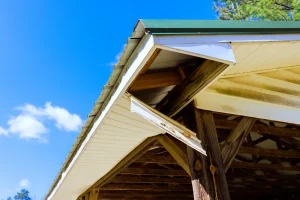
Keeping your roof strong requires regular care and early repairs. Simple maintenance can prevent small problems from turning into major structural failures. Homeowners who inspect their roofs regularly often catch warning signs before serious damage develops.
Keep Gutters Clean
Blocked gutters trap water on the roof and increase moisture damage. Clean drainage systems help water flow away safely during storms and heavy rain. Regular cleaning also prevents ice or debris buildup that can force water under shingles, slowly weakening the roof edge and creating hidden leaks that spread into the structure without early warning signs.
Trim Nearby Tree Branches
Large branches hanging over the roof can fall during storms and damage the structure. Trimming trees reduces the chance of sudden impact damage. It also reduces leaf accumulation on the roof surface, which helps maintain proper drainage and prevents constant moisture exposure that can speed up wood decay and structural weakening in vulnerable roof areas.
Check the Attic Regularly
Attic inspections help spot moisture, mold, or weak roof supports early. Small warning signs are often easier and cheaper to repair quickly. Regular checks can also reveal insulation gaps, hidden leaks, or sagging beams, allowing homeowners to address problems before they spread into ceilings, walls, and other parts of the home structure.
Schedule Annual Roof Inspections
Professional roof inspections can identify hidden structural problems before they become dangerous. Yearly inspections are especially important for older roofs and storm-prone areas. These inspections often include detailed structural assessments that detect early-stage damage not visible from the ground, helping homeowners prevent major repairs and maintain long-term roof safety and stability.
Frequently Asked Questions
Is Structural Roof Damage Covered by Insurance?
Many homeowners insurance policies may cover structural roof damage caused by storms, wind, fallen trees, or sudden accidents. However, damage caused by neglect, poor maintenance, or old age is often not fully covered. Insurance companies usually inspect the roof before approving claims. Keeping repair records and taking photos after storms can help support your insurance claim and speed up the process.
How serious is structural roof damage?
Structural roof damage can become extremely dangerous if ignored. Weak roof supports may collapse, leak heavily, or create electrical and safety risks inside the home. In severe cases, it can compromise the stability of ceilings and connected wall structures, making the entire house less secure during storms or heavy wind conditions. Even minor structural damage can worsen quickly when exposed to ongoing moisture or severe weather, leading to higher repair costs and increasing the risk of injuries, property damage, and long-term structural instability.
Can a damaged roof collapse suddenly?
Yes, severe roof damage can collapse without much warning, especially during storms, heavy rainfall, or when trapped water adds extra weight to weak areas.
Older roofs with long-term water damage or rotting support beams are often at a much higher risk of sudden structural failure. Vibrations from strong winds, falling tree branches, or shifting roofing materials can also trigger an unexpected partial or complete collapse. If you notice significant sagging, large cracks, or unusual movement in the roof, stay out of the affected area and arrange a professional roof inspection as soon as possible to protect your home and family.
Is structural roof damage expensive to repair?
Repair costs depend on how severe the damage is. Small repairs are usually manageable, but major structural problems often require extensive rebuilding work. Costs can increase quickly when water damage spreads into insulation, ceilings, walls, electrical systems, or large sections of the roof frame. Labor intensity, material replacement, and emergency repairs further raise overall restoration expenses. Addressing structural roof damage early is often far less expensive than waiting until the damage affects multiple areas of the home or requires a complete roof replacement.
Should I stay inside a house with severe roof damage?
If the roof is heavily sagging, leaking near electrical wiring, or making cracking or popping sounds, it is safest to contact roofing professionals immediately and stay away from the affected areas. Remaining inside a home with severe roof damage during storms or heavy rain can increase the risk of injury from structural collapse, falling debris, or electrical hazards. If there are clear signs that the roof may fail, evacuating the home until a qualified contractor confirms it is safe is often the best way to protect your family.