
Extreme heat can put significant stress on a roofing system. When outdoor temperatures remain high for several days or weeks, the roof is exposed to intense sunlight, ultraviolet radiation, and repeated temperature changes. These conditions can gradually weaken roofing materials, especially when the roof is already old or has existing damage. The effects may not be visible immediately. A roof can look fine from the ground while heat is slowly causing shingles to become brittle, protective granules to loosen, sealants to deteriorate, and roofing components to expand and contract. Over time, these changes can increase the risk of leaks and shorten the useful life of the roof.
Understanding how extreme heat affects roof shingles and roofing materials can help homeowners recognize early warning signs and take preventive action. Regular inspections, proper ventilation, timely repairs, and choosing roofing materials suitable for the local climate can all help protect the roof from excessive heat.
How Extreme Heat Affects Roof Shingles
Roof shingles are designed to withstand normal exposure to sunlight and changing weather conditions. However, prolonged extreme heat can accelerate the natural aging process. When the roof surface becomes extremely hot, roofing materials can expand. As temperatures fall at night, they contract again. This repeated movement creates stress throughout the roofing system. Over time, extreme heat can affect shingles in several ways.
Extreme Heat Can Cause Shingles to Crack
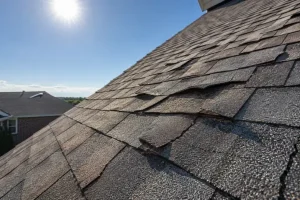
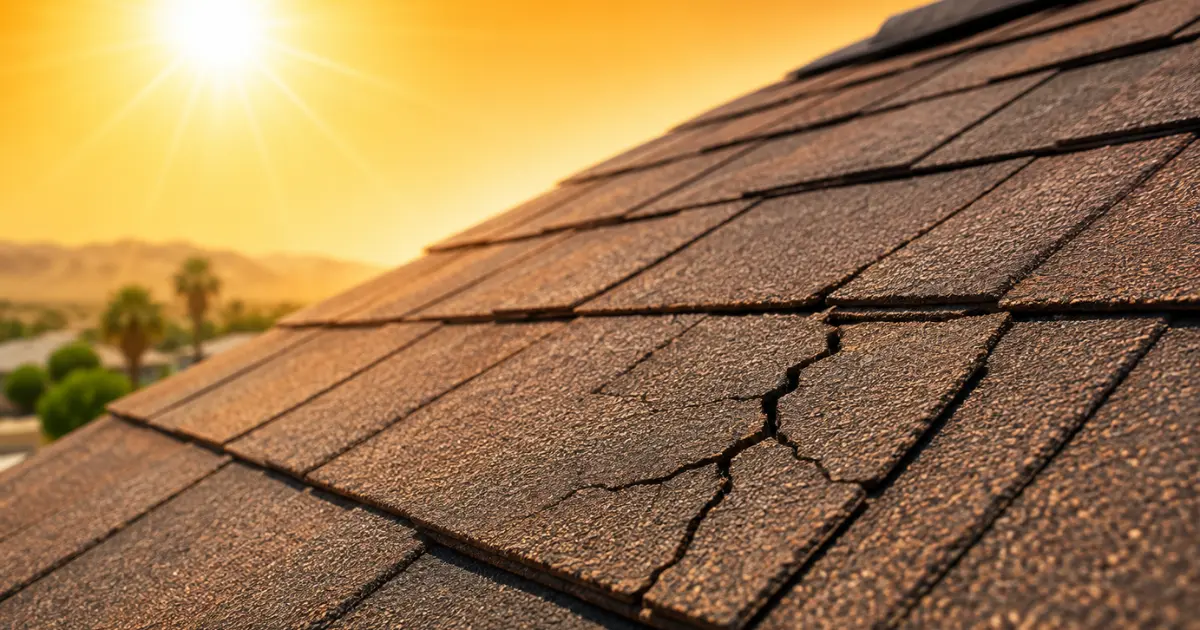
One of the most common effects of prolonged heat is cracking. Asphalt shingles contain asphalt compounds that help keep them flexible and weather-resistant. Continuous exposure to high temperatures and UV radiation can gradually cause these materials to dry out and lose flexibility. Once shingles become brittle, they are more likely to develop small cracks. These cracks may start as minor surface damage but can become larger as the roof continues to experience heat, rain, wind, and temperature fluctuations. Cracked shingles may no longer provide a reliable barrier against water. If moisture reaches the layers underneath, it can eventually contribute to roof deck damage, insulation problems, or interior leaks.
Shingles May Curl at the Edges
Extreme heat can contribute to shingle curling, particularly when combined with aging, poor installation, inadequate ventilation, or moisture problems. Curling may appear along the edges or corners of individual shingles. Once the shingles begin lifting, they become more vulnerable to wind. Rainwater can also move underneath lifted edges. Instead of flowing smoothly toward the gutters, water may enter areas where it should not. If you notice widespread curling across a roof, the problem should be evaluated rather than ignored.
Heat Can Cause Shingles to Buckle
Buckling occurs when shingles develop raised or uneven areas across their surface. Several factors can contribute to buckling, including thermal expansion, moisture, improper installation, and inadequate ventilation. Extreme heat can make an existing problem more noticeable by causing roofing materials to expand and move. Buckled shingles can affect the appearance of the roof, but the bigger concern is that uneven materials may be more vulnerable to wind and water intrusion.
Protective Granules Can Be Lost
Asphalt shingles are covered with mineral granules. These granules help protect the asphalt surface from sunlight and weather. Extreme heat and prolonged UV exposure can accelerate the deterioration of the asphalt beneath these granules. As shingles age, granules may become loose and fall away. You may notice granules collecting in gutters or near downspouts. A small amount of granule loss can occur naturally as shingles age, but significant or sudden loss may indicate accelerated deterioration.
UV Radiation Can Weaken Roofing Materials
Heat is only part of the problem. The sun’s ultraviolet radiation also plays a major role in roof deterioration. Every day, UV rays strike the roof surface. Over years of exposure, this can break down certain roofing materials and cause them to lose flexibility. The combination of high temperatures and intense sunlight can accelerate this process. This is particularly important in areas that experience long, hot summers or strong year-round sunlight.
Shingles Can Become Brittle 
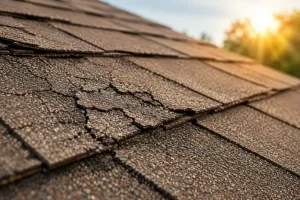
A healthy shingle should have enough flexibility to withstand normal movement and weather conditions. Extreme heat affects roof shingles by causing asphalt materials to lose flexibility and become increasingly brittle. Brittle shingles are more likely to crack when exposed to:
- Strong winds
- Heavy rain
- Hail
- Temperature changes
- Foot traffic
- Maintenance work
Shingles May Fade
Sun exposure can gradually change the appearance of roofing materials. Fading is often viewed as a cosmetic problem, but it can also be an indication that the roof has experienced substantial UV exposure. A faded roof does not automatically mean the shingles have failed. However, changes in shingle color combined with cracking, granule loss, curling, or brittleness deserve closer inspection. Fading can become more noticeable after long periods of intense sunlight and high temperatures. While changes in shingle color alone may not affect roof performance, they can signal that the shingles have been exposed to prolonged weathering. Checking for other signs of deterioration can help determine whether the roof needs maintenance or professional inspection.
How Extreme Heat Affects Different Roofing Materials
Not all roofs respond to heat in the same way. The material used on the roof has a major influence on how it performs during periods of extreme temperatures. Some materials are designed to reflect more sunlight and resist heat, while others may absorb more solar energy and experience faster aging. Understanding how heat affects each roofing material can help homeowners choose suitable options and identify potential problems before they become serious. Regular roof inspection can also help detect heat-related damage, such as cracking, curling, granule loss, and weakened flashing, before these issues lead to costly repairs.
Asphalt Shingles and Extreme Heat
Asphalt shingles are widely used because they are relatively affordable, versatile, and available in many styles. However, they are continuously exposed to the sun. Extreme heat affects roof shingles by accelerating aging and weakening the materials. Prolonged heat can contribute to:
- Cracking
- Curling
- Granule loss
- Brittleness
- Fading
- Seal deterioration
The quality and age of the shingles also matter. A newer, high-quality shingle may perform better under harsh conditions than an older roof that has already experienced years of weather exposure.
Metal Roofing and Extreme Heat
Metal roofing is generally durable and can perform well in hot climates. However, metal expands when heated and contracts when temperatures fall. This movement is known as thermal expansion and contraction. Over many temperature cycles, movement can place stress on:
- Fasteners
- Seams
- Flashing
- Metal panels
- Sealants
- Connections around roof penetrations
The metal itself may remain strong while smaller components around it become worn or loose. Reflective coatings and appropriate roof colors can also affect how much solar heat the roof absorbs.
Flat Roof Membranes
Commercial buildings and some residential properties use single-ply or other membrane roofing systems. Extreme heat and UV exposure can contribute to aging of certain membranes. Depending on the specific material and installation, excessive heat may contribute to:
- Surface deterioration
- Shrinkage
- Cracking
- Blistering
- Loss of flexibility
- Seal failure
Flat roofs also require proper drainage. If heat-related deterioration combines with standing water, the risk of roofing problems can increase.
Roof Underlayment
The visible roof covering is only one part of the roofing system. Underlayment sits beneath the shingles or other roof covering and provides another layer of protection against moisture. Extreme heat affects roof shingles and can also accelerate the aging of some underlayment products, particularly when the material is exposed because the outer roofing layer has become damaged or missing. If the underlayment deteriorates, the roof may become more vulnerable to water intrusion.
Flashing and Sealants
Flashing protects vulnerable areas around:
- Chimneys
- Skylights
- Vents
- Walls
- Valleys
- Roof edges
- Pipes
These areas often contain joints and sealants that must remain watertight. Extreme temperature changes can cause materials to expand and contract. Over time, sealants may become brittle, shrink, crack, or separate from surrounding surfaces. A small gap around flashing can become a significant leak point during heavy rain.
Why Temperature Changes Matter
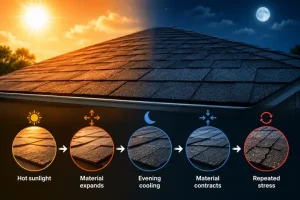
Extreme daytime heat is not the only concern. A roof can become very hot during the day and then cool significantly at night. This creates repeated expansion and contraction.
Over many cycles, this movement can contribute to wear around seams, fasteners, flashing, sealants, and other roofing components. The impact is usually gradual rather than immediate, which is why regular roof inspections are important.
How Extreme Heat Affects the Attic
The roof and attic are closely connected. During a hot day, heat can build up beneath the roof covering. If the attic does not have adequate ventilation, hot air may remain trapped for extended periods. An overheated attic can contribute to:
- Higher indoor temperatures
- Increased air-conditioning demand
- Moisture problems
- Premature aging of some roofing components
- Reduced insulation performance
- Greater thermal stress on the roofing system
The Connection Between Roof Ventilation and Heat
| Roof Ventilation Component | How It Helps With Heat |
|---|---|
| Intake Vents | Allow cooler outside air to enter the attic. |
| Exhaust Vents | Allow hot, trapped air to escape from the attic. |
| Proper Airflow | Prevents excessive heat from building up inside the attic. |
| Balanced Ventilation | Helps air move continuously through the attic for better temperature control. |
| Professional Inspection | Identifies blocked vents, poor airflow, or an unbalanced ventilation system. |
| Proper Vent Design | Ensures intake and exhaust vents work together effectively. |
| Insufficient Ventilation | Can trap heat inside the attic and contribute to higher temperatures and roofing material stress. |
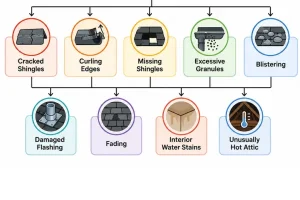
Signs That Extreme Heat May Be Damaging Your Roof 
Does Roof Color Matter in Extreme Heat?
Roof color can influence how much solar energy the roofing surface absorbs. Darker roofing materials generally absorb more heat than lighter or more reflective surfaces. In hot climates, reflective roofing products can help reduce solar heat absorption. However, choosing a roof color should not be based on heat alone. Home design, local climate, roofing material, appearance, energy goals, and building codes should also be considered.
How to Protect Roof Shingles From Extreme Heat
You cannot prevent high outdoor temperatures, but you can reduce some of the problems associated with heat exposure.
- Inspect the Roof Regularly: Check for damaged shingles, loose flashing, missing components, and signs of water intrusion before small problems become more serious.
- Maintain Proper Attic Ventilation: Make sure intake and exhaust vents are clear and functioning properly. Good airflow can help reduce excessive heat buildup inside the attic.
- Keep Gutters and Downspouts Clear: Clean gutters regularly so rainwater can drain properly. Blocked gutters can cause water to back up against roofing components and increase moisture damage.
- Repair Damaged Shingles Quickly: Replace cracked, curled, or missing shingles as soon as possible. Small damaged areas can allow water to reach the underlying roofing system.
- Maintain Flashing: Check flashing around chimneys, vents, skylights, and other roof penetrations. Damaged flashing can create entry points for water.
- Check Attic Insulation: Proper insulation can reduce heat transfer between the roof and living space. For better results, insulation and ventilation should work together.
- Consider Heat-Reflective Roofing: If your area experiences frequent extreme heat, consider reflective or cool-roof materials during a roof replacement. These materials can reflect more solar energy and absorb less heat than some conventional roofing products.
Should You Replace Your Roof After Extreme Heat?
Not every roof exposed to extreme heat needs to be replaced. If the damage is limited to a few shingles or small areas of flashing, repairs may be enough. Replacement becomes more likely when the roof has widespread deterioration, extensive cracking, significant granule loss, repeated leaks, or has reached the end of its expected service life. A professional inspection can help determine the condition of the entire roofing system rather than focusing only on visible surface damage.
Repair vs. Replacement After Heat Damage
How to Prepare Your Roof Before a Heat Wave
If extreme temperatures are expected, a few preventive steps can help. Start by checking the roof for visible damage. Look for missing or cracked shingles and damaged flashing. Clean gutters and downspouts so rainwater can drain properly when storms arrive. Then check the attic ventilation system. Make sure vents are not blocked by insulation, debris, or other materials. If the roof is already showing signs of deterioration, consider having it inspected before extreme weather arrives. Taking action before a problem becomes urgent is usually easier and less expensive than dealing with a major roof failure.
How Extreme Heat Can Increase Energy Costs
A roof that absorbs significant solar heat can contribute to higher temperatures inside the building. When the attic and roof structure become extremely hot, more heat can transfer into the living space, particularly when insulation and ventilation are inadequate. This can cause the air-conditioning system to work harder. Improving insulation, ventilation, and roof reflectivity may help reduce heat transfer and improve indoor comfort. However, energy performance depends on the entire building envelope, not the roof alone.
Why Older Roofs Are More Vulnerable to Extreme Heat
Older roofs have already experienced years of sunlight, temperature changes, rain, wind, and other environmental stress. As roofing materials age, their protective properties can gradually decline.
An older roof may therefore be more likely to experience:
- Cracking
- Curling
- Granule loss
- Brittleness
- Seal failure
- Flashing deterioration
- Leaks
A heat wave may not create all these problems from scratch. Instead, it can accelerate weaknesses that were already developing.
When to Call a Roofing Professional
Some roofing problems can be difficult to identify from the ground. You should consider arranging a professional inspection if you notice:
- Multiple cracked or curled shingles
- Large areas of granule loss
- Missing shingles
- Water stains inside the home
- Repeated roof leaks
- Damaged flashing
- Sagging areas
- Blistering or bubbling
- Significant deterioration on an older roof
- Signs of damage after severe weather
A professional inspection can help identify the source of the problem and determine whether repair or replacement makes more sense.
Frequently Asked Questions
How hot can roof shingles become?
Roof surface temperatures can become significantly higher than the outdoor air temperature when the roof is exposed to direct sunlight. The actual temperature depends on factors such as roof color, material, sunlight intensity, outdoor temperature, wind, and surface reflectivity. Dark shingles usually absorb more heat, while lighter or reflective roofing materials can stay cooler. Poor attic ventilation can also allow heat to build beneath the shingles, increasing stress on the roofing system. During periods of extreme heat, this repeated exposure may contribute to faster material aging and surface deterioration.
Does extreme heat cause roof leaks?
Extreme heat can contribute to leaks by accelerating deterioration in shingles, flashing, sealants, and other roofing components. Heat may also worsen existing weaknesses. Once cracks or gaps develop, rainwater can enter the roofing system. High temperatures can make some roofing materials brittle or cause sealants to dry and lose flexibility. If the roof already has damaged shingles, exposed areas, or weak flashing, extreme heat may make these problems more noticeable. Regular inspections can help identify heat-related damage before it develops into a larger leak.
Does extreme heat shorten roof life?
Prolonged exposure to high temperatures and UV radiation can accelerate the aging of roofing materials. However, roof lifespan also depends on installation quality, material type, maintenance, ventilation, moisture exposure, weather conditions, and the age of the roof. Repeated heating and cooling can place additional stress on roofing components, especially when temperatures change quickly. Proper attic ventilation can help reduce excessive heat buildup beneath the roof surface. Keeping the roof clean, repairing minor damage, and scheduling inspections can also help protect roofing materials from premature deterioration.
Should I replace my roof after a heat wave?
Not automatically. If the roof has only minor damage, repairs may be sufficient. A replacement may be considered when deterioration is widespread, the roof is old, leaks are recurring, or major components have failed. A professional inspection can help determine the appropriate solution. After a severe heat wave, look for cracked or curling shingles, loose flashing, damaged sealants, or visible signs of wear. Replacing a roof based only on high temperatures may be unnecessary if the roofing system remains structurally sound and performs properly.
How often should a roof be inspected in a hot climate?
Regular inspections are especially useful in areas that experience prolonged heat and intense sunlight. The appropriate frequency depends on the roof’s age, material, condition, and local weather. An inspection after severe weather or an unusually hot season can also help identify developing problems. Older roofs or roofs exposed to strong sunlight may need closer monitoring than newer systems. Inspections can reveal cracked shingles, worn flashing, ventilation problems, and early signs of moisture damage, helping homeowners address small issues before they require more extensive roof repairs.
Final Thoughts
Extreme heat can affect more than the appearance of your roof. Prolonged high temperatures, intense sunlight, and UV exposure can gradually weaken shingles and other roofing materials. Cracking, curling, granule loss, brittleness, flashing deterioration, and seal failure can all become more likely as roofing systems age. Knowing how extreme heat affects roof shingles and roofing materials makes it easier to recognize problems before they turn into expensive repairs.
Regular inspections, proper ventilation, good insulation, clean gutters, timely repairs, and appropriate roofing materials can all help improve roof performance in hot weather. If your roof is showing signs of heat-related deterioration, do not wait for the next heavy storm to reveal the problem. Having the roof inspected early can help you understand its current condition and decide whether maintenance, repair, or replacement is the best option.