
Why Roofs Leak Without Rain
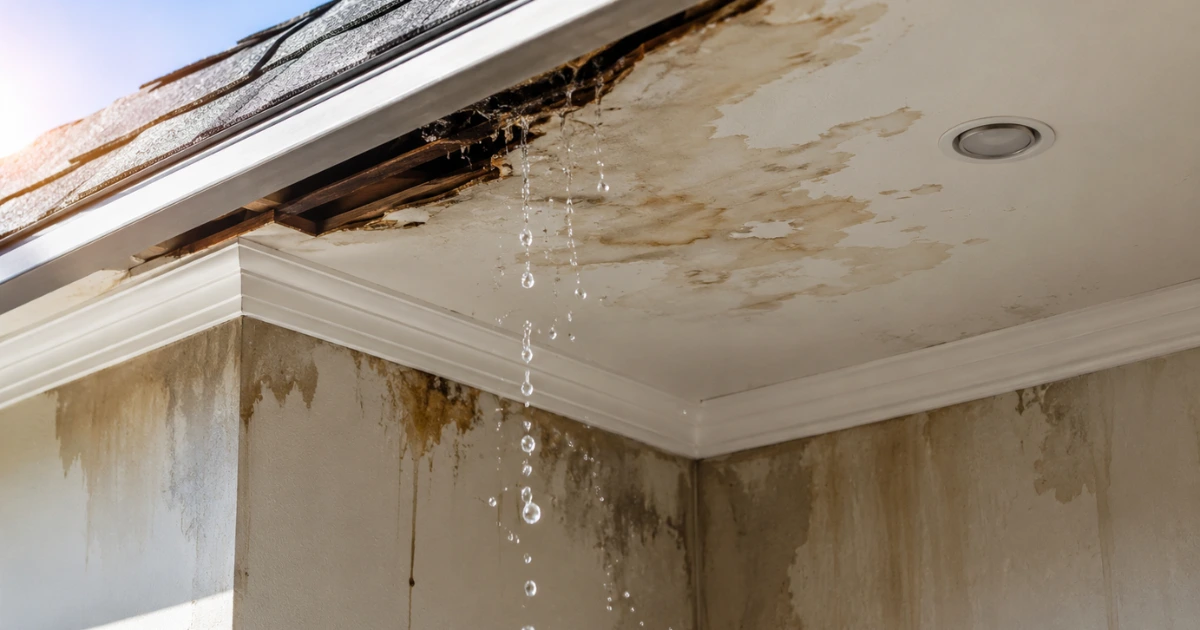
A roof can leak even when the sky is clear. This often happens due to hidden problems that build up over time. Moisture may come from leftover rainwater, damaged flashing, clogged gutters, or even indoor plumbing lines. When heat changes or humidity rises, trapped water can move and appear as leaks inside the house.
Roof materials may also expand and contract during temperature shifts, creating tiny gaps where moisture slowly enters. Even small structural weaknesses can allow condensation to form and travel along beams or insulation, making the leak appear in unexpected areas of the home. Poor ventilation can make the problem worse by allowing warm, moist air to collect beneath the roof. Over time, this moisture can weaken roofing materials and create damp spots that are difficult to trace.
Common Hidden Sources of Roof Leaks 
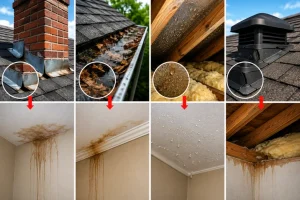
Poor Roof Flashing Installation: Flashing is used to seal roof joints and edges. If it is loose, rusted, or installed poorly, water can slip through small gaps. Even without rain, moisture in the air or leftover water can enter these weak points and create visible indoor leaks over time. Flashing around chimneys, vents, skylights, and roof valleys is especially important because these areas have more joints and seams. Small installation problems may stay hidden for months before moisture finally reaches the ceiling or walls inside the home.
Blocked Gutters and Water Backup: When gutters are full of leaves and dirt, water cannot flow away properly. It may sit on the roof and slowly seep under shingles. This trapped moisture can drip inside later, even when the weather is dry and calm outside. Standing water can also weaken roofing materials and damage the edges of shingles. If the blockage remains for too long, moisture may reach the roof deck and insulation, causing stains, damp areas, or musty odors indoors.
Condensation in Roof Space: Warm indoor air can rise and meet a cold roof surface. This creates condensation that forms small water droplets. Over time, these droplets can collect and drip down, making it look like a roof leak even without any rainfall. Poor attic ventilation can increase this moisture buildup by preventing humid air from escaping properly. Insufficient insulation can also make roof surfaces colder, creating better conditions for condensation to develop and spread across nearby materials.
Damaged Roof Ventilation Components: Roof vents help control airflow and moisture in the attic. If a vent cover is cracked, loose, or improperly sealed, moisture can collect around the opening and move into the roof structure. Over time, this hidden moisture may travel through insulation or wood and eventually appear as a leak inside the home, even when there has been no recent rainfall.
Early Signs You Should Not Ignore
- Water stains appearing on ceilings after moisture exposure.
- Musty smells developing in rooms without clear cause.
- Peeling paint appearing on walls near affected areas.
- Soft spots developing in ceilings from trapped moisture.
- Mold growth appearing in corners or hidden areas.
- Dripping sounds coming from ceilings or walls at night.
- Wet insulation found in the attic after inspection.
- Sudden increases in indoor humidity without obvious explanation.
Main Reasons Behind Dry Weather Roof Leaks Explained 

- Small roof cracks let moisture slowly enter the home.
- Old shingles lose strength and allow water seepage.
- Damaged sealing around vents creates hidden leak paths.
- Poor attic airflow increases condensation inside the roof.
- Heavy debris traps water and weakens roof surface layers.
- Improper roof slope causes slow water drainage problems.
- Temperature changes expand materials and open tiny gaps.
- Unnoticed storm damage weakens roof structure over time.
Simple Warning Signs at Home
- Small water spots often appear on ceilings first.
- Paint may start bubbling or peeling near walls.
- Rooms can feel more humid than usual indoors.
- A faint mold smell may develop over time.
- Walls may show slow spreading damp patches.
Why Roof Leaking Without Rain Can Be Hard to Notice 
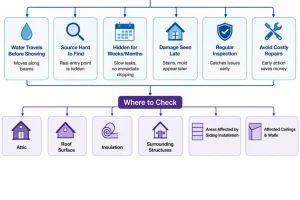
Some roof leaks stay hidden for weeks or months. Water may travel along beams before showing inside. This makes the real source difficult to find. Many homeowners only notice damage when stains or mold appear. Regular inspection helps catch these hidden problems early and avoids costly repairs later. Early warning signs may include damp insulation, peeling paint, musty smells, or small discoloration on ceilings and walls. Paying attention to these changes can help identify moisture problems before they spread to larger areas of the home.
Leaks are also hard to detect because roofing layers often hide moisture between insulation and wooden structures. The water path can shift depending on gravity and airflow, so the visible damage may appear far from the actual entry point. Slow leaks do not create immediate dripping, which delays detection until the damage becomes more serious. Temperature changes can also cause hidden moisture to move through different materials, making the problem appear and disappear at different times. This is why locating the source often requires checking the attic, roof surface, insulation, surrounding structures, and areas affected by Siding Installation carefully.
Simple Facts About Roof Water Problems
Roof water problems often begin in ways that are easy to miss. Even a very small crack can turn into a leak over time. Water doesn’t always show up right where the problem starts; it can travel across the roof before appearing inside your home. This can make finding the actual source more difficult, especially when the visible stain is far from the damaged area.
Changes in temperature can also cause roofing materials to expand and contract, which slowly makes gaps bigger. Another common issue is blocked drainage, which many people don’t notice until water starts backing up. And not every leak comes directly from rain; sometimes the source is something less obvious, such as condensation, damaged flashing, or moisture trapped beneath roofing materials. Understanding these issues can also help homeowners when learning How to Budget for Roof Replacement, especially when hidden damage may affect the overall repair cost.
Small roof weaknesses can gradually worsen when exposed to repeated humidity cycles, allowing moisture to seep in slowly without obvious warning signs. Over time, this hidden buildup can weaken structural components and lead to interior damage that appears suddenly, even though the issue developed gradually. Regular roof inspections can help identify these problems early and reduce the chance of costly repairs later.
Key Things to Remember
- Check your roof condition regularly, even during dry seasons and periods of mild weather.
- Look for new stains on ceilings and walls regularly, especially after heavy rain or storms.
- Keep gutters clean and free from leaves, dirt, and debris to prevent water buildup problems.
- Watch for unusual musty smells developing indoors over time, particularly in rooms with poor ventilation.
- Inspect the attic for hidden moisture and dampness signs, especially around insulation and roof joints.
- Fix small cracks quickly before they grow into larger problems and cause expensive structural damage.
- Maintain proper roof ventilation throughout the year for better airflow and reduced moisture buildup indoors.
- Call experienced experts for accurate hidden leak detection when needed to prevent further roof damage..
Common Roof Leak Causes and What They Mean
Many roof leaks happen for different reasons, and each one needs a different fix. Some are small and easy, while others need expert help. This section helps you understand the most common causes and how serious they can be. Knowing this makes it easier to decide what action to take before the damage gets worse inside your home.
Common causes include damaged or missing shingles, which expose the roof base to moisture and allow water to seep in during humidity or minor weather changes. Cracked flashing around chimneys or vents can also create entry points where water slowly enters and spreads. Blocked gutters often cause water overflow, forcing moisture back under roofing layers. Aging roofing materials lose their strength over time, making them more vulnerable to leaks even without heavy rain.
Simple Ways to Understand Leak Sources
Roof Surface Damage
Shingles can crack, lift, or wear out over time. When this happens, water can slowly enter the roof layers. Even small damage can grow quickly if not fixed, leading to hidden leaks that show up inside the home later. In addition, strong sun exposure and temperature changes can weaken shingles faster than expected, increasing the risk of unnoticed moisture entry.
Weak Roof Seals
Roof seals around vents, chimneys, and joints can break down with age. Once these seals fail, small gaps form. Moist air or trapped water can enter through these openings and create leaks, even without active rainfall. Temperature changes, strong winds, and prolonged exposure to sunlight can also cause sealants to crack or lose their flexibility. Over time, these damaged areas can become common Roofing Problems, allowing moisture to move beneath roofing materials and reach the ceiling or walls inside the home.
Poor Roof Drainage
Why Dry Day Leaks Still Happen
Dry day leaks often come from moisture already trapped inside the roof system. Heat can move this moisture around, making it drip inside the house. Old damage, poor sealing, or leftover storm water can all stay hidden for days before showing clear signs indoors.
Another reason is condensation forming under the roof surface when warm indoor air meets cooler roofing materials. This trapped moisture can slowly collect and release at different points, creating the appearance of an active leak even without any rainfall. Blocked ventilation can make this process worse by preventing moisture from escaping properly.
What Happens If You Ignore Small Leaks
Small leaks may not look serious at first, but they can grow fast. Water slowly damages wood, insulation, and paint. Mold can spread and weaken the structure. Repair costs also increase the longer the problem is left untreated inside the home.
Ignoring early leaks can also lead to hidden structural decay, where wooden supports gradually lose strength without visible warning. Electrical systems near damp areas may also become risky if moisture spreads further. What starts as a minor drip can eventually turn into widespread interior damage that requires major restoration work.
Key Causes Behind Hidden Roof Problems 
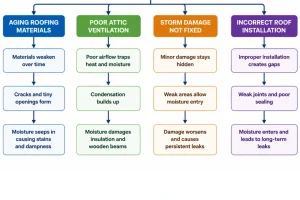
Aging Roofing Materials
Old roofing materials lose strength over time. They become brittle and weak, allowing water to pass through small cracks that form naturally with age. Moreover, constant exposure to sun, wind, and temperature changes speeds up this process, making the roof more vulnerable even without visible damage.
As the surface continues to deteriorate, protective layers such as shingles and underlayment may start separating. This creates tiny openings where moisture can slowly seep in and spread across hidden layers of the roof. Over time, these small weaknesses become more noticeable and lead to interior staining or damp patches.
Poor Attic Ventilation
Bad airflow in the attic traps heat and moisture. This creates condensation that can drip down and look like a roof leak during dry weather. In addition, high humidity levels can worsen the issue, leading to mold growth and long-term structural problems if not addressed early.
When warm air cannot escape properly, it rises and collects under the roof surface. This trapped moisture keeps cycling between warm and cool conditions, causing continuous condensation buildup. Eventually, this moisture can soak insulation and wooden beams, reducing the roof’s overall durability and efficiency.
Storm Damage Not Fixed
Damage from previous storms does not always appear immediately. Minor issues like loosened shingles or hairline cracks can remain hidden for weeks or months. Gradually, such weak areas allow moisture to enter, even in dry conditions. Without timely inspection and repair, small damage can turn into a more serious leak problem.
Left untreated, storm-related weaknesses can expand as materials shift with weather changes. Water can slowly find its way through compromised areas, spreading into underlying layers. What started as minor structural stress can develop into persistent leaks that are harder and more expensive to repair.
Incorrect Roof Installation
What You Should Do Next
- Inspect your ceiling for early water stains.
- Check attic space for damp or mold signs.
- Clean gutters to ensure proper water flow.
- Look around roof edges for visible damage.
- Monitor indoor humidity levels regularly.
- Repair small cracks before they spread.
- Call a roofing expert for a full inspection.
- Avoid ignoring small leaks inside the home.
Frequently Asked Questions
Why is my roof leaking without rain?
It usually happens due to trapped moisture, old damage, or plumbing issues. Water may stay hidden in the roof and appear later during dry weather changes. Temperature shifts and poor ventilation can also push moisture out unexpectedly.
Can condensation cause roof leaks?
Yes, warm air inside the attic can turn into water droplets. This condensation can drip and look like a roof leak even without rainfall. It often happens in poorly insulated or improperly ventilated attic spaces. Daily temperature changes make the problem worse, allowing moisture to build up gradually and create visible water spots over time.
If this process continues, moisture can accumulate on roof structures and drip in different areas, making it difficult to trace the exact source. Over time, repeated condensation can also weaken insulation performance and encourage mold growth.
Is a dry weather leak serious?
Yes, it can still cause damage. It often means there is hidden moisture or roof weakness that needs attention before it gets worse. Ignoring it may lead to mold growth, wood rot, and structural issues over time. Additionally, these problems can spread beyond the roof, affecting ceilings, walls, and even indoor air quality if left untreated.
What may look like a minor issue can gradually turn into widespread damage inside the home. The longer moisture stays trapped, the more it weakens building materials, increasing repair costs and restoration time.
Should I call a roofer for small leaks?
Yes, even small leaks can grow fast. A quick inspection helps find the real cause and prevents costly repairs later. Early detection also protects insulation, ceilings, and interior walls from further hidden damage. Moreover, professional assessment ensures that minor issues are fixed correctly before they turn into major structural concerns.
Roofing professionals can also identify hidden problem areas that are not visible from inside the home, helping prevent future leaks and ensuring the roofing system stays strong and secure.