
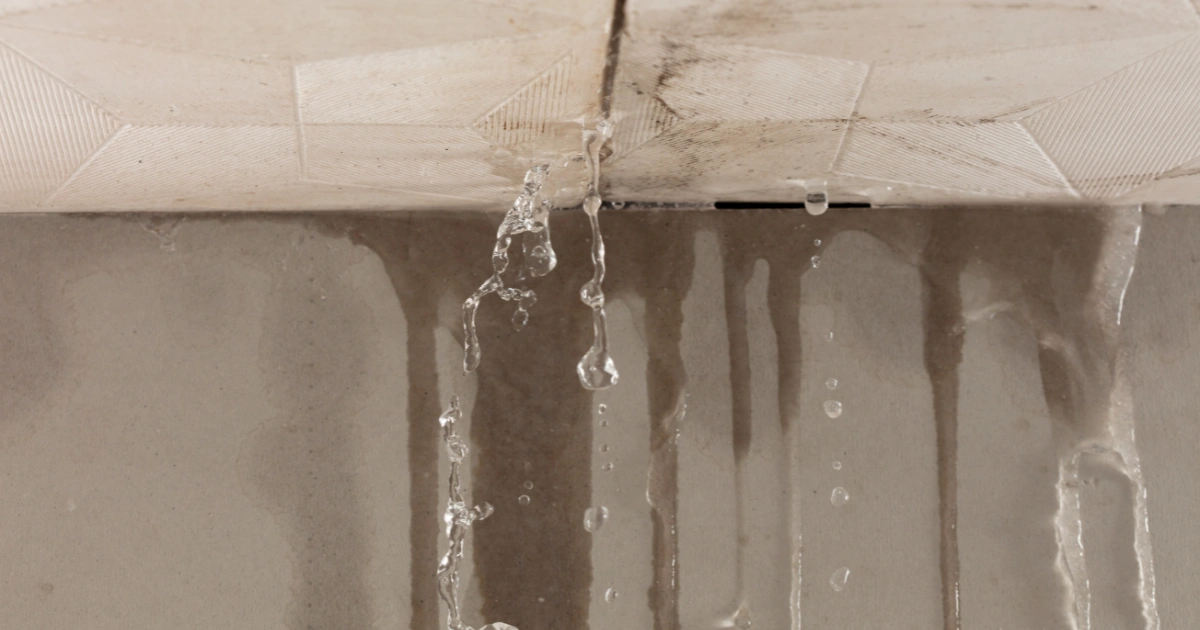
Why does a small roof leak become such a big problem over time? A small roof leak might not seem like a big deal at first. A few drops here and there, maybe a damp ceiling spot you might think it can wait. But here’s the harsh truth: roof damage from water leaks is a silent destroyer. It slowly weakens your entire roof structure from the inside out. When temperatures drop again, that trapped water refreezes and expands, making the damage worse. Moisture then spreads into insulation, wooden beams, and ceiling layers, causing hidden rot and reducing your roof’s strength. You may not notice anything from outside, but inside the structure, the roof damage from water leaks continues quietly.
What starts as a tiny issue can turn into costly structural damage, mold growth, and even safety risks. Roof damage from water leaks can become more serious when moisture remains trapped for weeks or months. Early repairs can prevent expensive restoration, protect your family, and help maintain the overall strength and value of your home. Understanding how these leaks work helps you act early and protect your home before it’s too late.
What Happens When a Roof Leak Is Ignored
When a roof leak is left untreated, water doesn’t simply stay in one area. It can spread through small openings, seep deep into building materials, and gradually weaken the structure from the inside. What may begin as a minor leak can eventually cause widespread damage throughout your home.
Over time, water can damage wood, insulation, drywall, and even electrical systems, creating hidden risks that may not be immediately visible. Persistent moisture also creates an ideal environment for mold growth, musty odors, and material deterioration. Roof damage from water leaks can become increasingly severe when moisture continues to spread without timely repairs. The longer a leak remains unnoticed or unrepaired, the more extensive and expensive the damage can become. What could have been a simple roof repair can eventually turn into a costly and complex restoration project. In severe cases, prolonged water exposure may compromise the safety, strength, and stability of your home’s overall structure.
How Water Travels Through Your Roof System
| How Water Travels | What Happens | Potential Damage |
|---|---|---|
| Across Roof Decking | Water seeps into the decking and spreads sideways instead of dripping straight down. | Weakens larger sections of the roof, not just the area directly below the leak. |
| Into Insulation | Moisture soaks into insulation and reduces its effectiveness. | Trapped moisture can encourage mold growth and cause hidden damage. |
| Along Beams and Rafters | Water follows wooden beams and rafters as it moves through the roof structure. | Prolonged moisture can cause wood rot and weaken structural support. |
| Into Interior Walls | Water eventually reaches walls and ceilings through hidden pathways. | Can cause water stains, peeling paint, mold, and deeper structural problems. |
Early Signs Your Roof Structure Is in Danger
Many homeowners miss early warning signs because they seem minor. But these small clues often point to serious hidden damage.
- Water stains spreading across ceilings or upper walls may indicate a roof leak and moisture entering the home.
- Musty smell that gets stronger after rainfall can signal trapped moisture in the attic, roof, or wall spaces.
- Paint bubbling or peeling near roof edges often means moisture is getting behind the surface from hidden leaks.
- Soft or sagging spots on ceilings may indicate water damage or weakened materials caused by a roof leak.
- Dripping sounds inside walls during storms can reveal hidden water entry even when no visible leak appears.
- Dark patches or streaks on attic wood can signal repeated moisture exposure, leaks, or poor roof ventilation.
- Sudden increase in indoor humidity levels can suggest excess moisture entering through the roof or attic space.
- Visible mold growth in corners or ceilings may indicate a moisture problem that needs attention before damage spreads
Major Structural Damage Caused by Long-Term Leaks
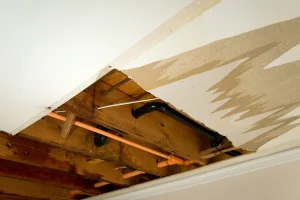
Wood Rot in Roof Decking: Constant moisture breaks down wood fibers. Decking becomes soft, weak, and unable to support roofing materials properly.
Weakening of Support Beams: Water exposure slowly damages beams and rafters. This reduces their strength and can lead to bending or structural instability.
Mold and Mildew Growth: Damp environments allow mold to spread quickly. This not only damages materials but also affects indoor air quality.
Insulation Breakdown: Wet insulation loses its ability to regulate temperature. This increases energy costs and creates uneven indoor comfort.
Ceiling Collapse Risk: When water collects above ceilings, it adds weight. Eventually, this can cause sections to bulge or collapse suddenly.
Electrical Hazards: Water reaching wiring can create short circuits. This increases the risk of electrical fires or system failures.
Interior Wall Damage: Moisture spreads into walls, causing cracks, stains, and weakened drywall that may need full replacement.
Foundation Stress: Persistent leaks can lead to water reaching lower levels. This may affect your home’s foundation stability in the long run.
Why Small Leaks Turn Into Big Problems
A tiny leak might look harmless, but it never stays small. Water keeps entering every time it rains, slowly increasing the damage. Materials don’t dry properly, and moisture builds up. This continuous exposure weakens your roof layer by layer until major repairs become unavoidable.
- Small leaks grow faster during heavy rain seasons.
- Moisture builds up even when the leak seems inactive.
- Hidden damage spreads before visible signs appear.
- Repair costs increase the longer you wait.
- Structural safety becomes a serious concern.
- Mold spreads beyond the original leak area.
The Hidden Cost of Long-Term Roof Leaks
Ignoring a leak doesn’t save money; it does the opposite. What could have been a minor repair can eventually turn into a full roof replacement or costly structural rebuild. The longer water continues to enter your home, the more materials it can damage, increasing repair costs and creating additional problems.
You may also face higher energy bills, interior repairs, and health concerns caused by mold growth spreading inside walls and ceilings. Roof damage from water leaks can also lead to stained ceilings, damaged paint, rotting wood, and weakened insulation that reduces heating and cooling efficiency. Acting early is always cheaper and safer than waiting for visible damage to become worse. Prompt inspections and timely repairs can help limit the spread of moisture, protect your home’s structure, and prevent a small roofing problem from becoming a major financial burden.
How Fast Damage Can Spread Inside Your Roof
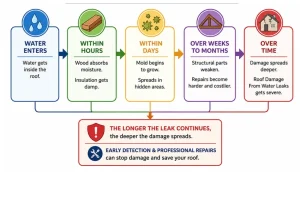
Once water enters your roof system, damage can begin within hours. Wood starts absorbing moisture quickly, while insulation can become damp almost immediately, reducing its effectiveness and creating conditions for further deterioration.
Within days, mold can begin to grow and spread into hidden areas, especially where moisture becomes trapped between roofing materials. Over weeks and months, structural components may continue to weaken, making repairs more complex and expensive. Roof damage from water leaks can become increasingly severe as moisture travels through multiple layers of the roof and surrounding structure. The longer the leak continues, the deeper the damage can spread. Early detection and professional repairs can help stop moisture from reaching critical structural components and prevent a minor roofing issue from becoming a major restoration project.
Key Takeaways You Should Never Ignore
- Even small leaks can destroy your roof structure.
- Water spreads faster than most homeowners expect.
- Hidden damage often costs more than visible repairs.
- Mold growth starts quickly in damp roof spaces.
- Structural beams weaken with continuous moisture exposure.
- Ceiling damage is often a late warning sign.
- Repair delays always lead to higher costs.
- Regular inspections can catch leaks early.
- Quick action prevents long-term structural damage.
- A healthy roof protects your entire home system.
Damage Timeline: How Fast a Leak Becomes Serious
| Time After Leak Starts | What Happens Inside Your Roof | Level of Damage |
| First 24 Hours | Water begins soaking insulation and wood | Low but spreading |
| 2–7 Days | Moisture builds up, mold may begin forming | Moderate risk |
| 1–4 Weeks | Wood starts weakening, stains appear inside | Serious concern |
| 1–6 Months | Structural damage increases, mold spreads | High damage |
| 6+ Months | Beams weaken, ceiling sagging possible | Critical danger |
A roof leak doesn’t take long to turn dangerous. Within hours, materials begin absorbing moisture. In days, hidden damage spreads. Weeks later, visible signs appear. If ignored for months, the structure itself can weaken, leading to costly repairs or even collapse in extreme cases.
Most Common Causes of Long-Term Roof Leaks 
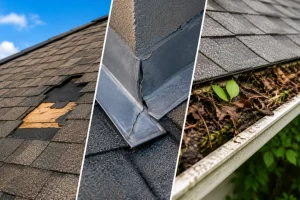
Leaks often don’t happen suddenly; they develop over time due to wear, poor installation, or lack of maintenance. Knowing the root cause helps prevent future damage.
Damaged or Missing Shingles
Shingles protect your roof’s outer layer. When they crack, curl, or go missing, water can easily slip underneath and reach the decking below, contributing to roof damage from water leaks. Over time, exposure to sun, wind, and heavy rain weakens shingles, making them more likely to fail and allow moisture inside, especially during storms or rapid snowmelt.
Small gaps can quickly expand if not repaired, allowing repeated water entry to weaken the roof structure further.
Cracked Flashing Around Openings
Flashing seals areas around chimneys, vents, and skylights. When it cracks or loosens, water finds easy entry points into your roof system. Poor installation or aging materials can make flashing more vulnerable, increasing the risk of slow, hidden leaks over time that often go unnoticed until interior damage appears. Even minor separation in flashing can redirect water into insulation and wooden framing.
Clogged Gutters
Common Leak Entry Points You Should Check
Leaks often start in predictable areas, so checking these spots regularly can help you find small problems before they cause serious water damage. Inspect around chimneys and roof joints for cracked seals or gaps where water can enter. Check near vents and exhaust openings for damaged flashing or loose materials. Roof valleys should also be inspected because they carry large amounts of rainwater and can develop leaks when debris collects. Look under damaged or lifted shingles for exposed areas that may allow moisture inside. Around skylights and roof windows, check for worn seals and damaged flashing. Gutter edges and downspouts should remain clear so water does not back up onto the roof. Also inspect flashing and sealant lines for cracks, separation, or gaps. Finally, check attic ventilation points for moisture, staining, or signs of water entry after heavy rain. Regular inspections can help prevent larger roof repairs.
Why Regular Roof Inspections Matter 
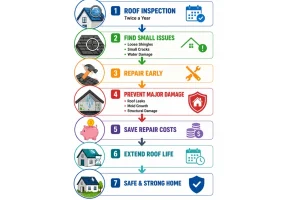
Routine roof inspections can save you thousands in repair costs over time. By checking your roof at least twice a year, you can catch small issues like loose shingles, minor cracks, or early signs of water damage before they grow into major problems. Regular checks are especially important after storms or heavy snowmelt, when hidden damage is more likely to occur. Early detection helps prevent structural damage, mold growth, and expensive repairs that come from long-term leaks. It also extends the lifespan of your roof by keeping all components in good condition and ensuring water drains properly instead of seeping into weak areas.
Simple Ways to Prevent Long-Term Roof Damage
Preventing leaks is always easier than fixing damage. A few simple steps can protect your roof, reduce repair costs, and extend its lifespan.
- Clean gutters regularly to avoid water buildup and help direct rainwater away from the roof, preventing moisture from collecting around shingles and roof edges.
- Replace damaged shingles immediately to keep water from reaching the underlayment and roof deck, where even a small opening can lead to costly repairs.
- Seal cracks around vents and flashing to stop rainwater from entering weak areas, especially around roof penetrations where leaks can develop quickly.
- Check attic for moisture or mold signs to catch hidden leaks early and prevent damp insulation, wood damage, poor air quality, and other moisture-related problems.
- Schedule professional roof inspections yearly to identify loose shingles, damaged flashing, drainage problems, and other small issues before they become major roofing concerns.
- Trim nearby trees to prevent roof damage from falling branches, reduce the buildup of leaves and debris, and allow more sunlight to reach damp roof surfaces.
- Ensure proper roof ventilation to reduce trapped heat and moisture in the attic, helping protect roofing materials, insulation, and the roof structure from unnecessary damage.
- Fix small leaks before they grow because even minor water entry can spread into insulation, ceilings, walls, and structural areas, making repairs more expensive.
What to Do If You Already Have a Leak
Contain the Water Immediately
Place buckets or containers under the leak as soon as you notice it. This simple step can help prevent water from damaging floors, furniture, and other belongings. Acting quickly reduces the spread of moisture and limits costly interior damage caused by continuous dripping, especially during heavy rainfall. It also helps you manage the situation until proper repairs can be completed.
Use Temporary Patches
Roofing tape, sealant, or waterproof tarps may help slow down a leak temporarily. These solutions are not permanent repairs, but they can reduce further water entry until professional repairs are completed. If using a temporary cover, make sure it is properly secured so wind, rain, or changing weather conditions do not worsen the damage or expose the affected area again. Temporary protection is especially useful during unexpected storms when immediate professional assistance may not be available, helping minimize moisture exposure and prevent the affected area from deteriorating further.
Inspect the Attic Area
Call a Roofing Professional
A professional inspection can help ensure the source of the leak is accurately identified and properly repaired. This can prevent future leaks, hidden water damage, and recurring problems that may be difficult to detect without experience. Roofing professionals can identify weak points, damaged materials, and potential structural issues that homeowners may overlook. They can also recommend lasting repair solutions that help protect your roof and extend its service life.
Why Acting Fast Saves Your Roof
Frequently Asked Questions
How long can a roof leak go before causing serious damage?
A roof leak can start causing serious damage within just 24 hours if water continues to enter the structure. Within a few days, mold growth may begin, and after a few weeks, wood and insulation can weaken significantly. If left untreated for longer, it can lead to major structural damage, higher repair costs, and even safety risks inside the home. The faster it is repaired, the less overall damage occurs.
Can a small leak really damage the entire roof?
Yes, even a small leak can eventually cause widespread damage to your roof. Water can travel quietly through hidden spaces, soaking wood, insulation, drywall, and ceiling layers far from the original entry point. Over time, this trapped moisture can weaken structural materials, encourage rot and mold growth, and create stains that are difficult to notice at first. If the leak continues without proper repair, the damage can spread and become much more expensive to fix. What starts as a minor issue may eventually affect the roof’s structural integrity, leading to costly repairs or even partial replacement. Addressing leaks early is one of the best ways to protect your roof and prevent small problems from becoming major structural concerns.
Is mold from roof leaks dangerous?
Yes, mold caused by roof leaks can pose health concerns and negatively affect indoor air quality. It can grow quickly in damp, dark areas and spread through walls, ceilings, insulation, and other moisture-affected materials. Exposure to mold may trigger allergy symptoms, coughing, sneezing, asthma symptoms, and other breathing problems, particularly in children, older adults, and people with weakened immune systems. Promptly addressing the roof leak and removing moisture-damaged materials can help prevent mold from spreading further. Taking action early not only protects your home but also helps maintain a cleaner, healthier living environment for everyone inside.
Should I repair or replace my roof after a long-term leak?
It depends on the severity and extent of the damage. Minor leaks that have not affected the underlying structure can often be fixed with targeted repairs. However, if a long-term leak has caused extensive rot, weakened roof framing, widespread moisture damage, or repeated problems, partial or full roof replacement may be necessary. A professional roof inspection is the best way to determine the condition of your roof and identify the safest, most cost-effective solution. Addressing the damage early can help prevent further deterioration and may save you from more expensive repairs or replacement in the future.
Final Thought
Long-term roof leaks are not minor problems; they can become serious threats to your home’s structure, safety, and value. Roof damage from water leaks can begin with something as small as a drip but quietly damage wood, insulation, ceilings, and support systems before you even realize how far the problem has spread. Over time, moisture can weaken structural materials, encourage mold growth, and turn what could have been a simple repair into a costly restoration project.
The key is early action. Spotting warning signs quickly, addressing leaks without delay, and maintaining your roof regularly can help prevent major damage and unexpected repair expenses. Regular professional inspections can also uncover hidden moisture, weakened materials, and structural issues before they become more serious.
Protecting your roof means protecting your entire home from costly, dangerous, and long-lasting damage. With timely care, proper maintenance, and professional repairs when needed, you can extend your roof’s lifespan, preserve your home’s value, and avoid problems that could have been prevented with early attention.